
Don't Guess! Choose the Right Torsion Springs for Your Garage Door
When your garage door spring snaps, your first instinct is likely to get it fixed as fast as possible. But did you know that installing the wrong size spring is one of the most common mistakes homeowners (and even some technicians) make?
An incorrect spring can leave your door "too hot" (wanting to fly up on its own) or too heavy, putting massive strain on your opener and cables. To help you make the right purchase and keep your family safe, here is our simple guide to understanding your garage door springs.
1. Know Your Door (Brand, Model, and Weight)
The biggest mistake you can make is ignoring the specifics of your door. A 16x7 door isn't just a 16x7 door—the weight varies wildly based on:
The Model: Is it a Wayne Dalton, First United, or Amarr? [02:31]
Insulation: Steel-back insulated doors are much heavier than non-insulated "bare bones" 25-gauge doors. [04:08]
Windows: Even the type of glass (single vs. double pane) changes the weight of the door. [03:05]
2. Check Your Track Assembly
Your springs work in tandem with your tracks. You need to know if you have a Standard 12-inch radius, a High Lift track (which hugs the ceiling), or a Low Headroom setup. Using a standard spring on a specialized track system will throw the entire door out of balance. [08:45]
3. Identify Your Original Springs
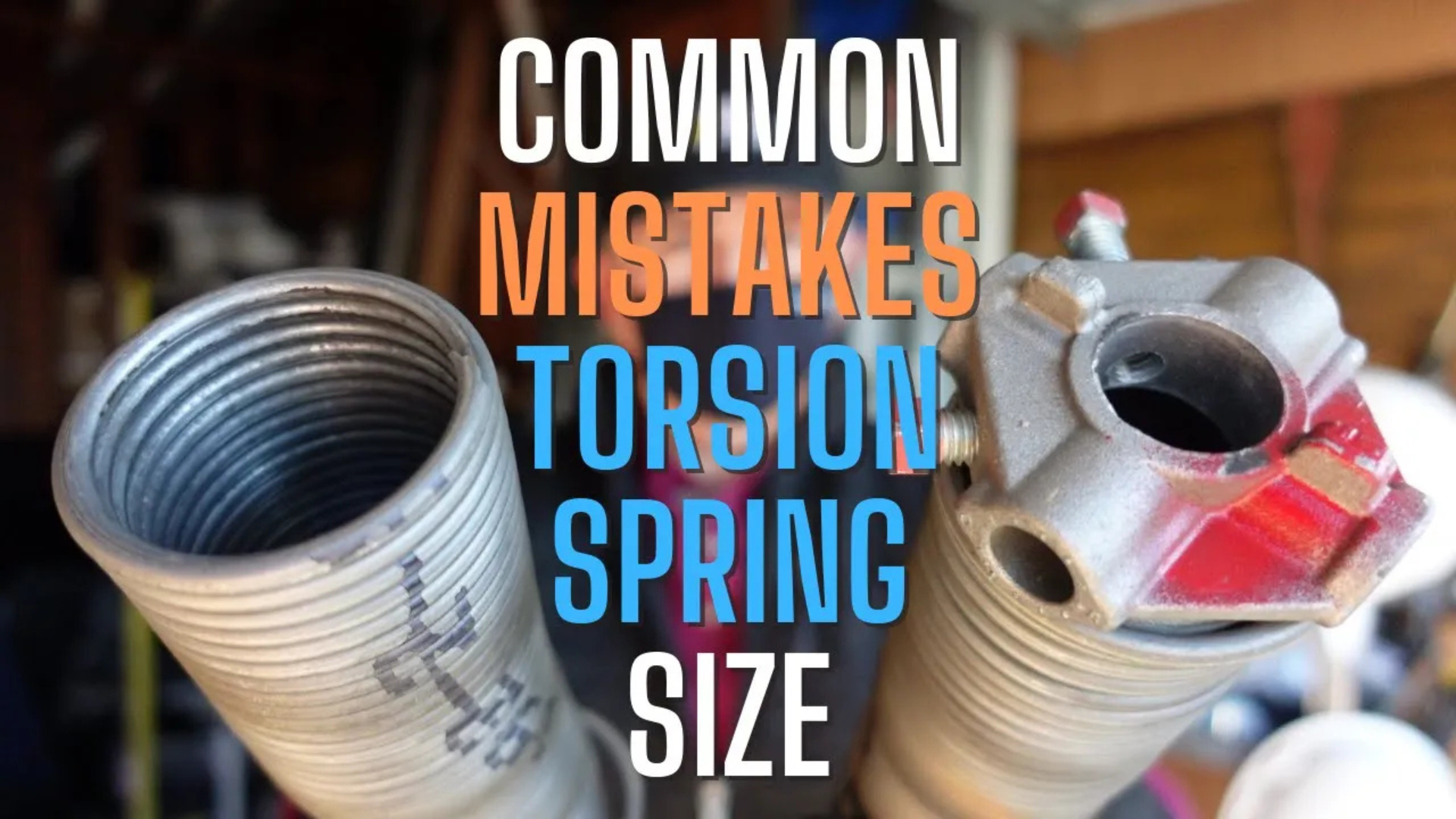
If your door was previously balanced correctly, your old springs are the best blueprint. Look for these three key pieces of information often printed right on the spring:
Wire Gauge: (e.g., .207, .218, .225)
Inner Diameter: (Commonly 1 ¾" or 2") [13:53]
Length: Measured in inches. [14:00]
Pro Tip: You can also look at the color coding on the ends of the springs. For example, yellow often indicates a .207 wire, white is .218, and red is .225. [14:44]
4. Consider a "High Cycle" Upgrade
When purchasing new springs, ask about the "cycle life." Most standard springs are rated for 10,000 cycles. Upgrading to high-cycle springs might cost a bit more upfront, but they can last twice as long, saving you money on labor and replacement costs in the long run. [16:19]
⚠️ A Note on Safety
Torsion springs are under extreme tension. In some states, you even need a contractor's license just to purchase them because they can be so dangerous to handle without the right tools and training. [00:49] Never touch or measure a spring that is still wound. Only inspect or measure a spring once it is already broken. [12:30]
Ready to get your door back in balance?
Don't risk a DIY disaster or a poorly balanced door. Our experts are here to help you identify the exact specifications you need for a safe, smooth-running garage.
Please reach out to your trusted local garage door contractor to get the right springs!